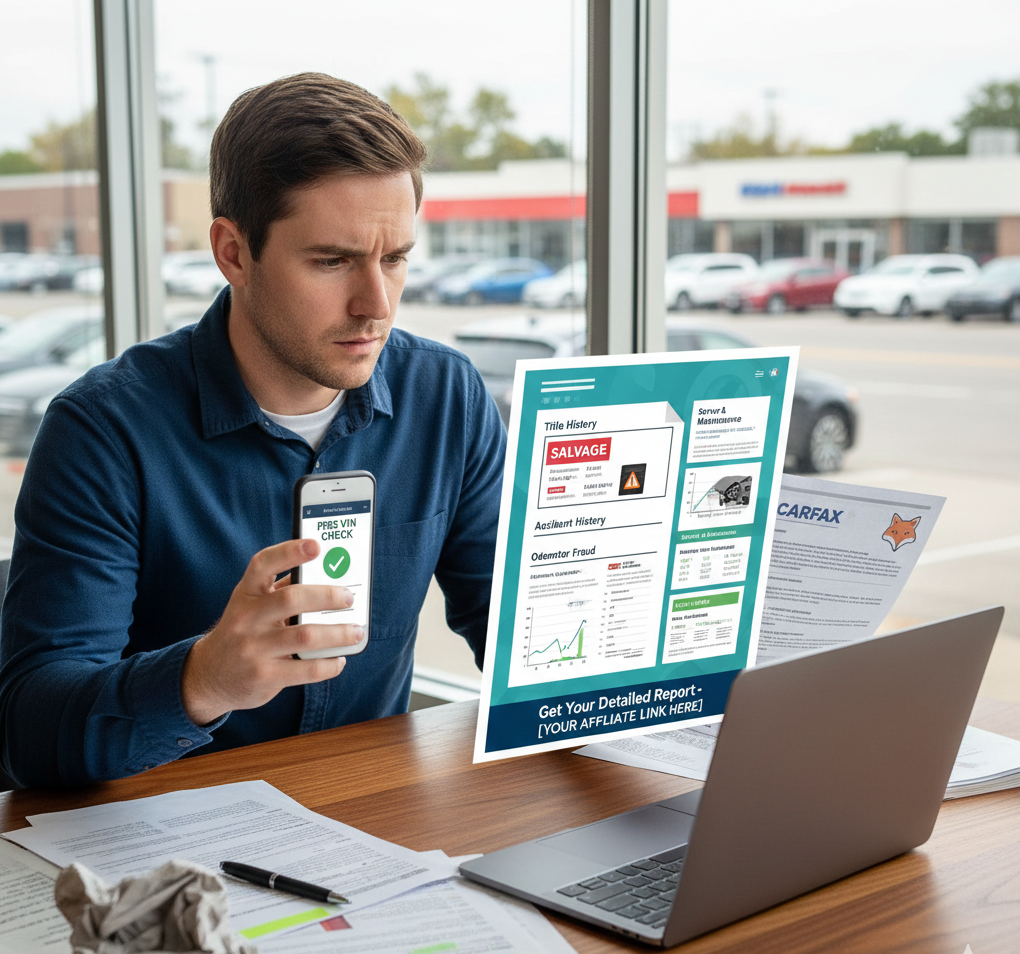
Buying a used car in the USA is a major financial decision, and the risk of buying a lemon is too high to ignore. You need more than a basic check; you need the full, Detailed Vehicle History Report (VHR). This report is your single best tool—your shield—to uncover hidden damage, fraud, and legal issues, giving you the peace of mind to negotiate with transparency.
Forget trusting the seller’s word. A Detailed Vehicle History Report provides the deepest level of transparency by using the car’s unique VIN to check records against state DMVs, insurance carriers, repair shops, and more. It ensures you know the car’s accurate value based on its true past.
👉 Get your Detailed Vehicle History report now and uncover the truth: Click Here
🚩 I. The Critical Truth: Red Flags That Affect Safety and Value
A Detailed VHR will immediately flag Title Brands—labels placed by state DMVs that indicate catastrophic damage or serious legal issues. These are the top reasons a car’s value and safety are compromised.
| Title Brand | What It Means | Why It’s Critical to You |
| Salvage / Total Loss | The car was deemed too expensive to repair after a major accident, fire, or severe weather event. | The car’s structure and systems are compromised. It is often difficult to insure. Avoid it. |
| Flood Damage | The car was submerged in water (e.g., during a hurricane or major storm). | Leads to hidden, long-term electrical and mechanical failure. |
| Odometer Fraud | The mileage readings are inconsistent or have been illegally tampered with (rolled back). | The car has more wear and tear than advertised, increasing the risk of major repairs. |
| Lemon | The car was bought back by the manufacturer due to persistent, unfixable defects under state Lemon Laws. | You are inheriting a vehicle with documented, ongoing problems. |
🔍 II. The Deeper Dive: Why You Need the Detailed Report
While a basic check confirms the title, a Detailed Vehicle History report provides the context you need to make an informed decision by including these essential data points:
1. Accident History and Repairs
The report goes beyond a simple “accident reported” to provide:
- Damage Severity: Details on the impact (e.g., if the airbags deployed) and whether the frame sustained structural damage.
- Inspections & Rebuilds: Notes if a previously salvage car was issued a rebuilt title after passing a state inspection.
2. Service and Maintenance Records
This is the car’s report card, proving whether previous owners cared for it:
- Maintenance: Documentation of routine service, like oil changes and fluid checks. Consistent service and maintenance records suggest a reliable car.
- Open Recalls: Checks against the NHTSA database to ensure the vehicle is safe and free of any unresolved manufacturer recalls.
3. Ownership History and Usage Profile
This data explains the type of life the car has lived:
- Previous Owners: The total number of owners and the duration of each ownership history.
- Usage Type: Clearly states if the car was used as a personal vehicle, a high-wear rental car, a commercial fleet, or a taxi.
4. Theft History and Legal Status
Essential for protecting your legal right to the vehicle:
- Lien Check: Verifies that no bank or lender has a financial claim (lien) on the car, ensuring the title can be legally transferred to you.
- Active Theft: Confirms whether the vehicle is currently reported as stolen (Active Theft Check).
⭐️ III. Why Carfax is the Recognized Name
Carfax is one of the most widely known and respected providers in the US market, often cited by dealerships as a sign of trust.
- Vast Data Network: Carfax gathers data from over 151,000 sources, including every US and Canadian motor vehicle agency, insurance companies, repair shops, and police departments, building a database of billions of records.
- Maintenance Focus: Carfax reports are particularly well-known for their comprehensive listing of service and maintenance records, which is crucial for assessing long-term vehicle health.
- The Buyback Guarantee: Carfax offers an exclusive Buyback Guarantee that reduces the risk involved in buying a used car with an undisclosed major title problem.
- Free Access: Many used car listings, especially on dealer websites, come with a free Carfax report included.
💰 IV. Negotiating with Confidence: Your VHR is Your Leverage
The Detailed Vehicle History report is not just a warning—it is your strongest tool to negotiate a lower price. Knowledge is your bargaining chip.
| VHR Finding | Negotiation Strategy |
| Gaps in Maintenance | Point out the lack of service records to argue that future repairs are more likely, justifying a price reduction. |
| Minor Accident Report | Highlight any reported damage or structural repair notes to negotiate the price down, even if the car looks fixed. |
| Unresolved Recalls | Insist that the seller cover the cost of all unresolved recalls before the sale, or reduce the price by the estimated cost of repairs. |
| High Number of Owners | Use the short ownership history or fleet/rental status as leverage, as these vehicles typically command a lower price. |
💳 V. Accessing Your Report
- Secure your investment now. Use the VIN to get your Detailed Vehicle History Report: Click Here
By combining the transparency of a detailed report with a mechanic’s expertise (a Pre-Purchase Inspection or PPI), you gain the peace of mind and negotiation power necessary to make a smart purchase.